Еmilia Todorova: Bulgaria Can Attract Investment Through Technology, Infrastructure and Predictability
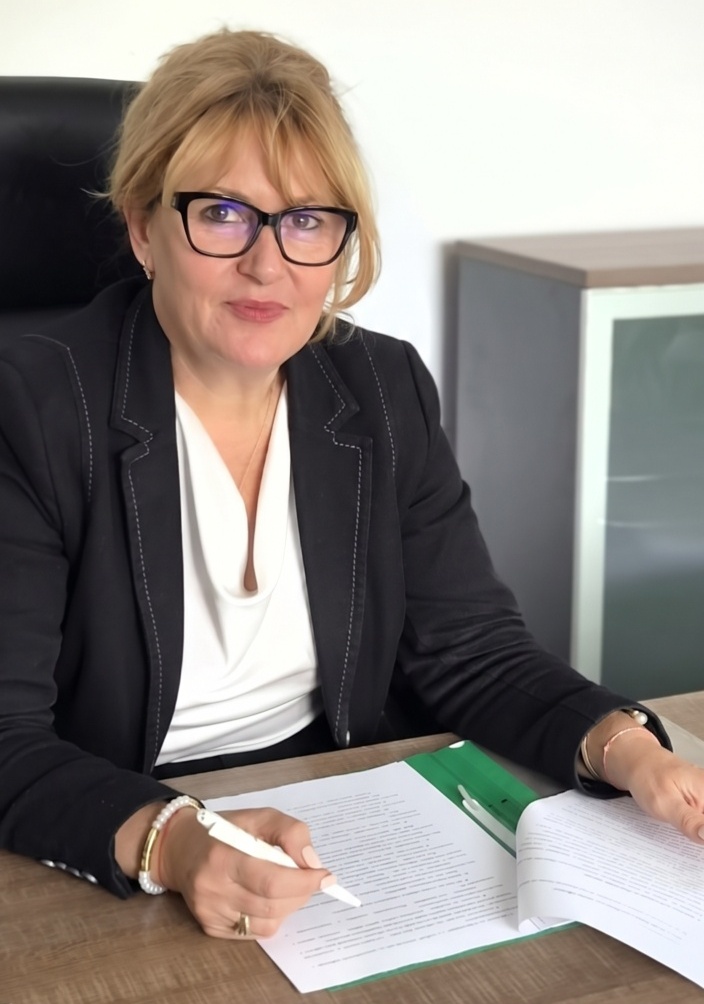
Dobroslavtsi Could Become Bulgaria’s Technology Hub, Says the Executive Director of “National Company Industrial Zones” EAD
Ivan Vatahov, “Standart” newspaper
– You took over NCIZ at a time when industrial zones are no longer simply sites for factories, but have become an instrument in the competition between countries for technology, capital and high-value jobs. This also places much higher expectations on the new management. Ms Todorova, what personal ambition did you bring to “National Company Industrial Zones” EAD, and what would you most like to change in the way the company operates?
– I took over the management of “National Company Industrial Zones” EAD (NCIZ) with the clear understanding that today an industrial zone or park can no longer be merely a plot of land with a “For Sale” sign on it. Investors are looking for a ready-made ecosystem – infrastructure, energy, strong connectivity, administrative efficiency, skilled people, partners and predictability.
My personal ambition is for NCIZ to become more proactive, faster and closer to business. To me, the major change needs to be in the way we think about the company’s role. NCIZ manages 13 projects in different parts of the country, which means that we also have a responsibility to use this resource not only for Sofia, but for the development of the regions as well.
My professional background is linked to the public sector, public finance management and the optimisation of structural processes, and this is precisely the approach I want to apply at NCIZ – greater efficiency, clearer processes and far more active engagement with investors. It is important to change the way we view the zones themselves. They cannot, and should not, all be the same. Some have the potential for high-tech manufacturing and R&D activities; others are suitable for logistics and light industry; while still others must first receive the infrastructure they need before they can become a genuine investment proposition.
Ultimately, I want us to measure success not by the number of meetings held, but by the number of investments actually implemented, jobs created, technologies attracted and added value generated for the regions.
– NCIZ has already announced negotiations on investments worth tens of millions of euros, but the real news comes when intentions turn into contracts, construction and new jobs. That is why specifics matter now. How many new investors do you expect to reach the implementation stage by the end of 2026, and is there a major project already close to completion that could soon be announced?
– Four major new projects by Bulgarian companies have been implemented at Industrial Park Sofia-Bozhurishte or are due to be completed by the end of the year. They are in different sectors and illustrate the diverse profile of investors in the park. One is a Bulgarian company with more than 30 years of experience in international road transport and freight forwarding, which is expanding its operations through a project for a modern facility and advanced logistics solutions serving customers in Bulgaria and abroad. Another project is being implemented by a company specialising in interior and architectural design, as well as the design and implementation of innovative spatial solutions for commercial, administrative and residential properties.
Another significant investment is a newly built warehouse facility developed by one of Bulgaria’s largest specialised wine importers, a company with more than 25 years of experience in the sector and a network of 100 partners across 14 countries. The investment also provides for a second phase involving an expansion of the facility.
The fourth project is by a Bulgarian company established in 2022, which is a leading importer and distributor of medical supplies. As part of the investment, a modern warehouse building is being constructed, equipped with high-tech solutions and designed to meet the requirements of efficient and optimised logistics processes.
These four projects are a good example of how Industrial Park Sofia-Bozhurishte attracts not only manufacturing companies, but also businesses operating in logistics, trade, services and high-tech activities.
I would not want the number of investors or specific investment amounts to become an end in themselves. What matters more is that the projects are real, have secured financing, a clear investment timetable and a specific commitment to construction and job creation. At present, I would say that we have a realistic opportunity for several of the ongoing projects to move from investment intentions to contractual arrangements by the end of the year. We have signed a preliminary agreement for the development of a specialised high-tech electromagnetic compatibility laboratory.
There are also proposed projects for industrial logistics and manufacturing-and-warehousing complexes, one of which will include additional investment in production equipment, machinery and specialised know-how for assembling electrical equipment. Larger strategic projects require more time. That is why I prefer to speak about them once we have a sufficiently solid contractual basis, rather than simply for the sake of generating a good headline.
– In September, NCIZ took an active part in business missions and forums in China and Poland. Such international meetings are most valuable when they lead to concrete discussions about establishing production in Bulgaria. Did you return from China and Poland with specific investor enquiries, and could we soon see a major new foreign investor in one of NCIZ’s zones?
– That is precisely the purpose of participating in such international events – not simply to present Bulgaria, but to establish direct contacts that can develop into concrete discussions after the forums are over.
During the visit to China in September this year, as part of the government delegation, NCIZ presented specific investment opportunities and industrial locations in Bulgarian industrial parks to Chinese businesses. The forums were attended by representatives of companies that are considering Bulgaria as a potential gateway to the European market. Their interest is focused on genuine manufacturing and technology projects rather than merely establishing a commercial presence.
NCIZ representatives also participated in a series of economic forums in China, including events held as part of the China International Fair for Investment and Trade in Xiamen (CIFIT), as well as a Bulgarian-Chinese business forum attended by more than 100 representatives of businesses and institutions.
In Warsaw, we also had the opportunity to participate in the Bulgarian-Polish Business Forum and to present the industrial parks within the company’s portfolio, together with the investment opportunities they offer.
The visit also included a number of institutional discussions with Polish partners from various sectors and industries. Together with representatives of the Bulgarian Small and Medium Enterprises Promotion Agency, we took part in discussions concerning the development of industrial zones, the exchange of investment projects and opportunities for subsequent Bulgarian-Polish initiatives.
– Economic Zone Dobroslavtsi is emerging as one of Bulgaria’s most ambitious state-backed industrial projects. What began as an idea for an automotive zone has now expanded to include space technologies, the defence industry and high-tech manufacturing. Is Economic Zone Dobroslavtsi becoming Bulgaria’s future high-tech hub, and what would you like the zone to look like five years from now?
– Economic Zone Dobroslavtsi already has the potential to become precisely such a hub, and something very important has happened in recent months – this vision has begun to take on very concrete dimensions., The project of Bulgarian space company EnduroSat is particularly indicative of this development. In August, a memorandum was signed between the government and the company through which the project is being implemented, Starbase Europe EOOD, for the development of a high-tech industrial park and a space and defence R&D centre in Dobroslavtsi. The project envisages the development of large-scale infrastructure on the site of the former military airfield, bringing together manufacturing, research and development, testing, education and logistics.
To me, this is a very important signal because it demonstrates what the next generation of industrial parks in Bulgaria could look like. We are not simply talking about several factories located next to one another. We are talking about an integrated technology ecosystem. This is particularly important for Bulgaria because EnduroSat is an example of a Bulgarian company that already competes globally.
In my view, this is where the major opportunity for Economic Zone Dobroslavtsi lies – not simply to become a location where one large investor builds a factory, but to create an ecosystem comprising suppliers, engineering companies, R&D centres, laboratories and educational institutions.
There is another important aspect as well: this project could change the way we think about industrial policy itself. If we succeed in demonstrating that technologies can be developed in Bulgaria and sold in Europe, the United States, Japan and other markets, then we are no longer speaking only about attracting investment. We are speaking about building our own technological capacity.
That should also be Bulgaria’s ambition.
– Industrial Park Sofia-Bozhurishte is already NCIZ’s most recognisable success story and is gradually attracting increasingly technology-intensive manufacturing and specialised services. This makes it possible to set a more ambitious objective than merely filling the available plots. Can Industrial Park Sofia-Bozhurishte take the next step and develop into a genuine technology cluster with R&D centres, laboratories and high-value-added manufacturing?
– Yes, and in my view, this is the natural next step.
Industrial Park Sofia-Bozhurishte already has the critical mass required for the development of such an ecosystem – numerous investors, a manufacturing base, logistics capacity, accumulated experience and proximity to Sofia.
As of October 2026, 49 investment projects are already being implemented in the park, with total investment exceeding EUR 340 million. The companies operate in sectors including the automotive industry, high technology, biotechnology, optics, the film industry and logistics.
An important part of NCIZ’s efforts to develop a high-tech industrial environment is the European Digital Innovation Hub known as the NCIZ Regional Centre for Digital Solutions and Innovation, which was established at Industrial Park Sofia-Bozhurishte with European funding under the Research, Innovation and Digitalisation for Smart Transformation Programme.
The centre is already functioning as a link between business, science and the public sector, supporting companies in the practical adoption of new technologies. The NCIZ Regional Centre for Digital Solutions and Innovation provides free services for assessing digital maturity and planning digital transformation, 3D scanning, modelling, prototyping and 3D printing, analysis and optimisation of production processes, as well as other solutions facilitating the digitalisation of businesses.
Through this infrastructure NCIZ is creating opportunities for innovative solutions to move from the idea and laboratory stage into actual production, helping companies enhance their competitiveness, optimise their processes and accelerate the adoption of innovation. Training sessions and webinars are also organised, along with open days that give businesses the opportunity to explore the centre’s technological capabilities first-hand.
Preparations are also under way for the launch of the new investment announced in the middle of the year for the development of a specialised electromagnetic compatibility laboratory in the park.
We are now also seeing a change in the nature of new investor interest. The specialised electromagnetic compatibility laboratory is a good example of the shift towards higher added value. We also have proposed projects involving manufacturing, logistics and assembly operations. In other words, the direction has already been set.
Our ambition should be for Industrial Park Sofia-Bozhurishte to host an increasing number of companies that do not merely manufacture, but also develop technologies and products.
– Industrial and Logistics Park Burgas and Industrial Zone Zagore are also showing strong investor interest, with some companies already taking concrete steps towards implementation. This is an important indication that industrial activity can expand beyond the capital. What volume of new investment and job creation do you expect from Industrial and Logistics Park Burgas and Industrial Zone Zagore, and can they become two of Bulgaria’s next major industrial centres?
– In fact, both projects are already demonstrating that industrial development does not necessarily have to be concentrated around Sofia.
Since their establishment, Industrial and Logistics Park Burgas and Industrial Zone Zagore have together attracted more than EUR 450 million in investment and created over 3,900 jobs. At Industrial and Logistics Park Burgas, there is already a fully functioning industrial ecosystem in Phase 1. In June this year, the infrastructure project for Phase 2, worth more than EUR 20 million, was completed and officially inaugurated. It was financed by the European Union through the National Recovery and Resilience Plan.
The project has delivered comprehensive internal infrastructure, including a road network, water and sewerage systems, electricity and telecommunications networks, video surveillance and all facilities required to service the newly developed plots. Even more importantly, investor interest is already being translated into action – eight companies have declared investment intentions in Phase 2, and some have already begun construction.
The institutional support provided by Burgas Municipality in its capacity as a partner in the company should not be underestimated either, as it makes a significant contribution.
Industrial Zone Zagore is also experiencing very strong momentum. In July 2026, Zagore-Elenino Industrial Park, the second phase of the development of Zagore Industrial Park, was officially inaugurated. The expansion of the industrial park through the Zagore-Elenino project is strategically important for attracting new investment, creating high-quality jobs and increasing the export potential of the Stara Zagora region. The project was implemented under the Public Support Programme for the Development of Industrial Areas, Parks and Similar Territories and for Investment Attraction – AttractInvestBG – with grant funding of nearly EUR 7.1 million. It is a key prerequisite for attracting new investment, creating high-quality jobs and enhancing the region’s export potential.
There are already concrete results – a large proportion of the industrial plots have been committed through declared investment intentions. These are very strong signals. However, for NCIZ, the most important thing is to follow these intentions through to their actual implementation – contracts, construction, production and jobs.
The rapid and successful development of these two industrial parks is also an excellent illustration of effective partnership models between municipalities and industrial parks, which are delivering very good and visible results.
– For a major investor, it is no longer enough simply to be shown an available plot of land. Electricity, water, roads, communications and the speed with which production can begin are all decisive factors. Can NCIZ confidently tell an international company today: “Come to Bulgaria – we will provide you with ready infrastructure and guide you through the entire investment process”? Where is there still room for improvement?
– We can say that for some of the zones, but I would not want to create the impression that all 13 locations are at the same level of development and readiness. That is simply not the case. In the leading parks, investors have access to developed road, electricity, water and sewerage, and telecommunications infrastructure. At Industrial Park Sofia-Bozhurishte, for example, there is electricity supply, water supply, sewerage, gas infrastructure and fibre-optic connectivity.
In other locations, substantial work is still required, including the development of electricity infrastructure, water and sewerage systems, roads, telecommunications, spatial-planning procedures and site preparation.
This was, in fact, one of the first priorities we set ourselves as the new management team – to identify what is required and take the first steps so that each particular park and plot can be transformed into a genuine investment proposition.
To make the process easier for investors, this year NCIZ developed an “Investment Process Guide – From Enquiry to Implementation”, which is available on the company’s website under the “For Investors – Investor Guide” section.
NCIZ cannot replace all state and local institutions, but the real potential for accelerating investment lies in strong coordination between NCIZ, municipalities, the Invest Bulgaria Agency, ministries, electricity distribution companies, water and sewerage operators and all other competent institutions. This is also an area in which we could become significantly faster.
– The shortage of qualified personnel is increasingly becoming one of the decisive factors when choosing an investment location. This means that an industrial park must gradually offer more than land and infrastructure. Is NCIZ working on a model that would connect industrial zones with vocational schools, universities and training centres so that investors can find not only a location for their factory, but also people with the right skills to work there?
– We respond positively to initiatives of this kind because skilled personnel are among the most important factors for the sustainable development of any industrial zone, and this issue cannot therefore be considered separately from the investment process.
I mentioned earlier the initiative to develop the NCIZ European Digital Innovation Hub, which we are developing jointly with the University of Chemical Technology and Metallurgy in Sofia and which is an example of partnership with scientific and educational institutions, including through initiatives such as the NCIZ Regional Centre for Digital Solutions and Innovation.
However, NCIZ is a commercial company, and its role is not to replace the education system or employers. Rather, it is to create and support partnerships between businesses, vocational schools, universities and training centres wherever a specific need exists.
Given that our investors are highly diverse and operate in different sectors, they themselves recruit the specialised personnel they require, and this also lies outside the scope of NCIZ’s activities.
– One of the major challenges facing the state is to ensure that investment also reaches Northwestern Bulgaria and regions that have been losing population and economic activity for years. It is precisely in these areas that a successful industrial zone could have a much greater impact on the local economy. Where do you see the next major industrial breakthrough outside Sofia, Burgas and Stara Zagora, and is there an NCIZ zone that you believe is on the verge of pleasantly surprising us with a major investor?
– I would not identify a specific zone and promise a “major investor” before such an investment has actually been agreed. That would not be appropriate, including towards the investor itself.
However, there are several locations with very strong potential. One of them is Industrial Park Vidin, which has a strategic location on the Danube River. At the same time, the challenges facing Northwestern Bulgaria are also clearly visible there – infrastructure, demographics and the availability of a sufficient number of qualified workers. The park has an actual industrial site and existing water and sewerage infrastructure, but that infrastructure requires rehabilitation and further development, including the construction of a new local wastewater treatment plant.
Industrial Park Pleven-Telish is another interesting opportunity. It offers a significant area and existing infrastructure, but the park’s full development will require substantial investment in both external and internal infrastructure, including electricity supply. I would say that the next major breakthrough could come precisely in a location where we succeed in solving the infrastructure challenge while also finding the right investor.
I do not want to identify one particular company or zone in advance as the “next big success”, because that would be speculation. But our objective is clear – industrial policy should not mean developing only those locations that are already successful. It should also create opportunities for regions where a single investment can have a much greater impact – on employment, incomes, local businesses and demographic prospects.
– Bulgaria competes for the same investors as Romania, Serbia, Greece, Türkiye, Poland and other countries, all of which also invest heavily in industrial parks and offer various incentives. For NCIZ, this means that having good sites is not enough – the country needs to offer a convincing reason to be preferred. When you sit across the table from a major international investor and they ask, “Why Bulgaria rather than one of the neighbouring countries?”, what are the three strongest arguments you would personally use to persuade them to invest here?
– First, Bulgaria has been a member of the European Single Market since 2007, and as of 1 January 2026 Bulgaria is also a member of the euro area, which marked a very important change in the country’s positioning. For international investors, this means even clearer integration into Europe’s economic and financial environment.
Second, cost competitiveness and the tax environment. Bulgaria continues to offer a 10% corporate income tax rate and comparatively competitive operating costs within the European Union.
Third, location and access to markets and supply chains.
Bulgaria is an EU Member State with access to the European market, a strategic position between Central Europe, the Balkans and Türkiye, and the potential to serve as a manufacturing platform for companies seeking to supply several markets simultaneously. And to these three national advantages, I would add the element that falls directly within NCIZ’s role: we can offer a specific location, a specific plot and a specific implementation plan rather than simply saying, “Bulgaria is a good investment destination.” Our task is to show investors precisely why a particular site is suitable for their project, what infrastructure will be available, what the timelines are, which institutions they need to work with and who will coordinate the process.
Ultimately, an international investor does not choose only a country. They choose an environment in which they can start production, find the people they need, grow and have predictability for the next 10 to 20 years. That is exactly how the management and the entire team want to position NCIZ – not simply as an owner and operator of industrial sites, but as a genuine partner to investors, from the first conversation all the way through to actual production.